How PR Got a Say in Business Decisions at Kolesa Group: An Interview with Anel Kerimbekova
Anel Kerimbekova, Head of PR at Kolesa Group, on how her team went from one-off communications tasks to a say in business decisions in two years, and why media coverage and events did not fix the company's reputation.
Two years ago, the PR team at Kolesa Group handled one-off communications tasks. Today, Head of PR Anel Kerimbekova and her team take part in business decisions. In the fourth quarter of 2024, the company had 70 positive organic mentions for every 100 negative ones. At the latest measurement in 2026, it had 104 (paid placements were not counted).
Kolesa Group has three products: Kolesa.kz, Krisha.kz and Avtoelon.uz. We asked Anel how the PR function got started, how to build working relationships with product teams, why media coverage and events were not enough, and how PR ended up commissioning a major project for the company's 30th anniversary.
How Kolesa Group built its PR function
In November 2024, the Kolesa Group team was asked to build a PR function. Until then it had worked mostly on the employer brand. Now it is responsible for that and for communicating with the people who use the products.
The three products serve different audiences: car dealers, property developers and estate agents, plus people selling a car, looking for a flat to rent or thinking about buying a home. Each group has its own needs, interests and view of the services, so each needed its own communications.
The team started with the standard tools: media coverage, press releases and events. But the reputation figures for the fourth quarter of 2024 showed that the problem needed a more systematic approach. As Anel puts it:
“PR is a long game. Like a relationship between people, a reputation is built over months and years. And above all, PR has to work with the business where decisions are made, not just turn up when there is a finished product to talk about.”
How did PR build relationships with product teams?
In 2025, the team started setting up processes with the product divisions so that PR would be involved in decisions before launch.
It was not easy. Not every manager saw why PR should be brought in, or what it was doing in a discussion about product decisions. A team might launch an A/B test or roll out a change without telling PR, and the communications people would hear about the user backlash only after the launch. The aim was to come in earlier, judge how the audience was likely to react and help head off reputational risks.
What did the team do to get PR involved earlier?
• Ran training sessions for product managers and the teams around them: customer service, analytics, UXR, GR and legal.
• Explained how PR works and why a product's audience is wider than its active users.
• Agreed who was responsible for what across departments.
• Wrote down the approval processes for media materials, events and crisis communications.
• Worked out with customer service how to handle negative comments on social media.
• Reported results in numbers: coverage, views, reach, brand awareness and how well events performed.
Anel uses Krisha.kz to explain the point about audience:
“Someone can buy a flat and not open Krisha.kz for years, but they still hear about the brand from the media, social networks and people they know. PR helps us reach that audience too.”
For more on setting up crisis communications at a technology company, see our crisis communications page. For measuring results, see monitoring and analytics.
Why were media coverage and events not enough?
The reputation figures did not improve in 2025, even though the team ran 26 events, launched collaborations and got product news into the media on a regular basis. Anel's conclusion:
“You cannot fix image problems that have built up over time with a few articles and events. It takes systematic work on the brand and on the customer experience.”
Period | What the team did | Positive mentions per 100 negative* |
|---|---|---|
Fourth quarter of 2024 | PR function launched: media coverage, press releases, events | 70 mentions |
2025 | 26 events, collaborations, regular product news, processes with product teams | 37 mentions |
Latest measurement, 2026 | Involvement in product positioning and releases, the company's 30th anniversary project | 104 mentions |
*Organic mentions only; paid placements were not counted.
How did PR come to commission Kolesa Group's 30th anniversary project?
In 2026, product teams began bringing PR into positioning and releases, and the PR team became the internal client for the anniversary project. It ran for eight months and involved 11 project teams and around 120 employees. Anel says:
“We could have stopped at a few articles and a celebratory video, but we decided to run a big campaign.”
The project had three goals: to reinforce Kolesa Group's image as a strong Kazakhstani company, to keep Kolesa.kz and Krisha.kz users loyal, and to bring partners, the IT community and employees into the celebrations. The PR team came up with ideas, pitched the projects, secured resources and joined the delivery at various stages.
How did the anniversary newspapers reach their audience?
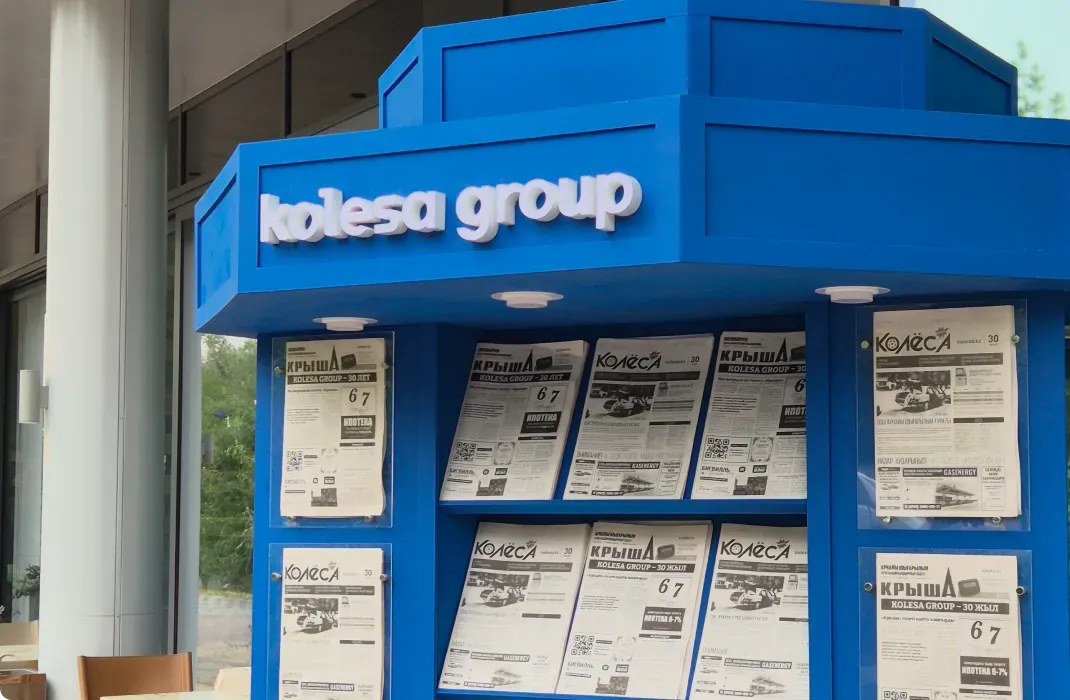
Kolesa Group started out as two newspapers, Kolesa and Krysha, so for its 30th anniversary the team went back to where it all began. It built a website telling the company's history in numbers and printed special issues of both papers. Printing them was only half the job, though: people had to see them. So Kolesa Group teamed up with AQQU, one of Almaty's oldest cafés and, like the company, a long-standing part of the city's history. The café got a vintage newspaper kiosk and a special menu, and for a month guests could try the dishes and read the anniversary issues.
What else did the anniversary project include?
Format | What was done | Scale |
|---|---|---|
Website and special newspaper issues | A website with the company's history in numbers; special issues of the Kolesa and Krysha newspapers | 4,000 copies printed and handed out |
Partnership with AQQU | A vintage newspaper kiosk and a special menu at the café | Dishes from the menu ordered more than 1,000 times |
Videos about the company's history | The team oversaw the ideas, scripts and filming itself | 58 micro-influencers for promotion |
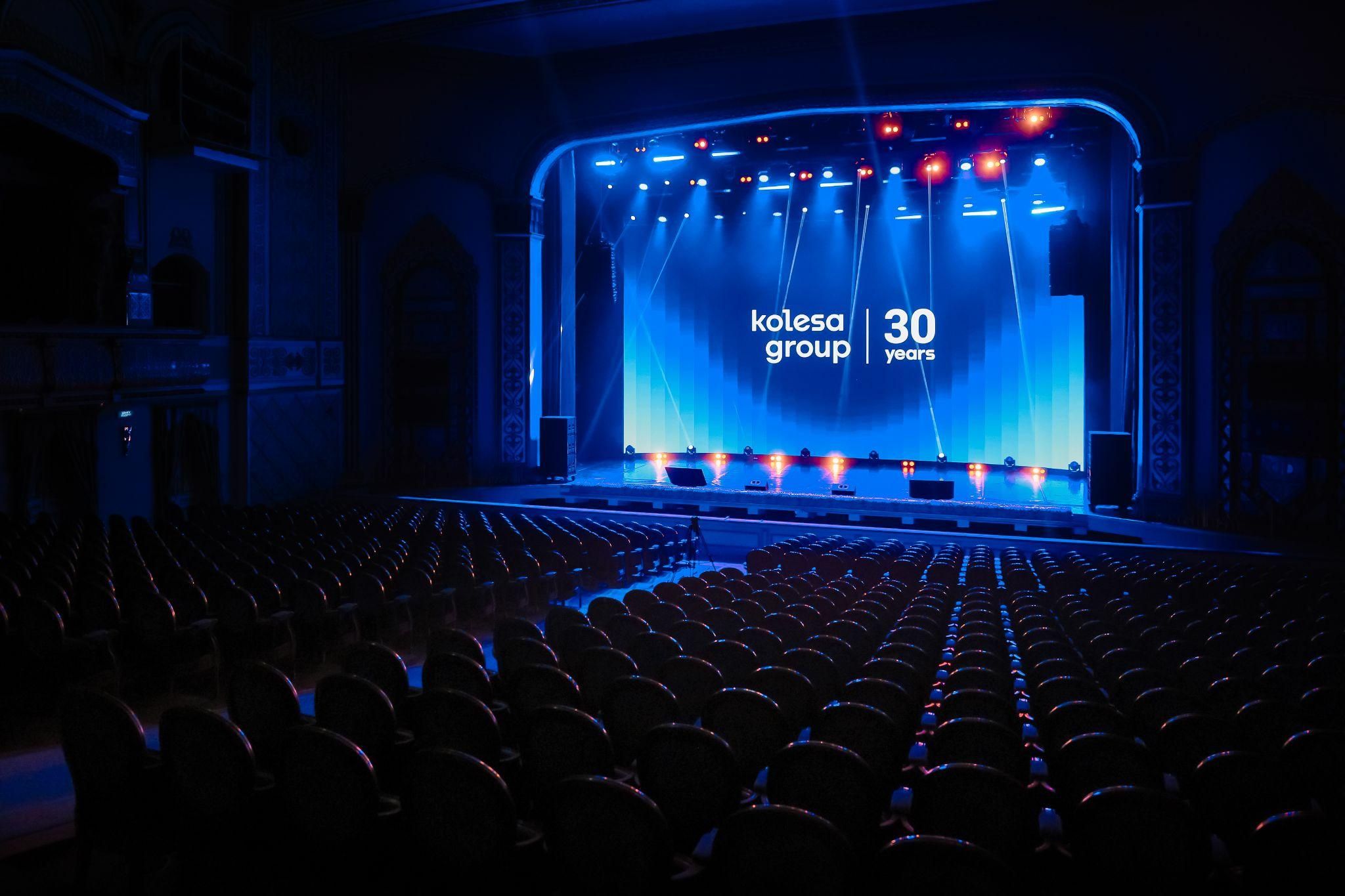
Anniversary evening for partners | An event at the Abai Theatre | More than 600 guests |
Krisha.kz feature | 100 miniatures of landmarks and interesting places in Kazakhstan on the property map; clicking one brings up its history and facts about it | 100 miniatures |
Kolesa.kz game | An in-app game: throughout August, users completed tasks and hunted for gifts | 21 prizes over the month |
What has changed in two years?
The reputation figures have gone up, as the table above shows. PR's role has changed as well: in two years the team has moved from one-off communications tasks to a part in how the business runs. It now works on product positioning, sits in on discussions of decisions and can start large projects of its own. For Anel, the main lesson is this:
“PR should not come in after the fact, once the product has shipped or the problem has already appeared. It should work with the business at the point where decisions are made. That is when communications can really be of use to the company and its products.”
Frequently asked questions
When should PR get involved in product decisions?
Before launch, while the decision is still under discussion. At Kolesa Group, the team pushed for PR to judge the audience's likely reaction in advance and help prevent reputational risks. Before that, PR heard about A/B tests and other changes only after they had gone live.
How do you show the business the value of PR?
With processes and numbers. At Kolesa Group, the team ran training sessions for product and neighbouring divisions, agreed who was responsible for what and reported results: coverage, views, reach, brand awareness and how well events performed.
How does Kolesa Group measure reputation?
By the ratio of positive to negative organic mentions, which means paid placements are left out. The figure is expressed as the number of positive mentions per 100 negative ones.
Are media coverage and events enough to improve a reputation?
Not at Kolesa Group. In 2025 the team ran 26 events and got regular news into the media, but the figures did not improve. Anel's view is that image problems built up over time need systematic work on the brand and the customer experience.
What did Kolesa Group's 30th anniversary project include?
The project ran for eight months and brought together 11 project teams and around 120 employees. It included a website with the company's history in numbers, special issues of the Kolesa and Krysha newspapers, a partnership with the AQQU café, videos promoted by 58 micro-influencers, an anniversary evening for more than 600 guests, 100 miniatures on the Krisha.kz map and a game in the Kolesa.kz app.
Conclusion
A part in business decisions has changed what PR does at Kolesa Group. The team used to hear about product changes, and how users took them, only after launch. Now it judges in advance how a decision is likely to land and helps reduce the reputational risk before release. The reputation figures rose in the period when PR started working on products, processes and the customer experience as well as on media coverage and events.
The company gains in several ways. Product teams hear how the audience is likely to react while a decision can still be changed. The company understands all of its audiences better, including people who have not opened the service in years but still hear about it. And a PR function with clear processes and reporting can propose large projects itself and pull several teams together to deliver them, as it did for the anniversary.
Other technology companies with several products and different audiences can take something from this: the earlier PR joins the discussion, the fewer reputational risks are left after launch.
PR and communications for technology companies: how ITCOMMS can help
ITCOMMS is a tech PR agency working in Kazakhstan, the rest of Central Asia and the Caucasus. We build communications strategies, handle the press through our PR and media relations service, help you measure results with monitoring and analytics, and prepare spokespeople for journalists in our media training sessions.
Want PR to be part of how your business makes decisions? Get in touch and tell us what you need.
Translated with an AI translator