PR in Uzbekistan: Why Media Coverage Alone No Longer Builds Reputation
Uzbekistan's market has moved beyond press releases and publication counts. Expert Valentina Butnik on why trust and reputation now decide who wins.
Uzbekistan is one of the fastest-growing markets in Central Asia. Economic reforms, an influx of foreign investment, the rise of the digital economy, and the arrival of international companies are opening new opportunities for business. And with them, expectations of corporate communications are shifting too.
A few years ago, PR was often reduced to media relations and a tally of publications. That no longer holds. Companies now compete not only on products and services, but on the trust they can build with customers, partners, investors, and future employees.
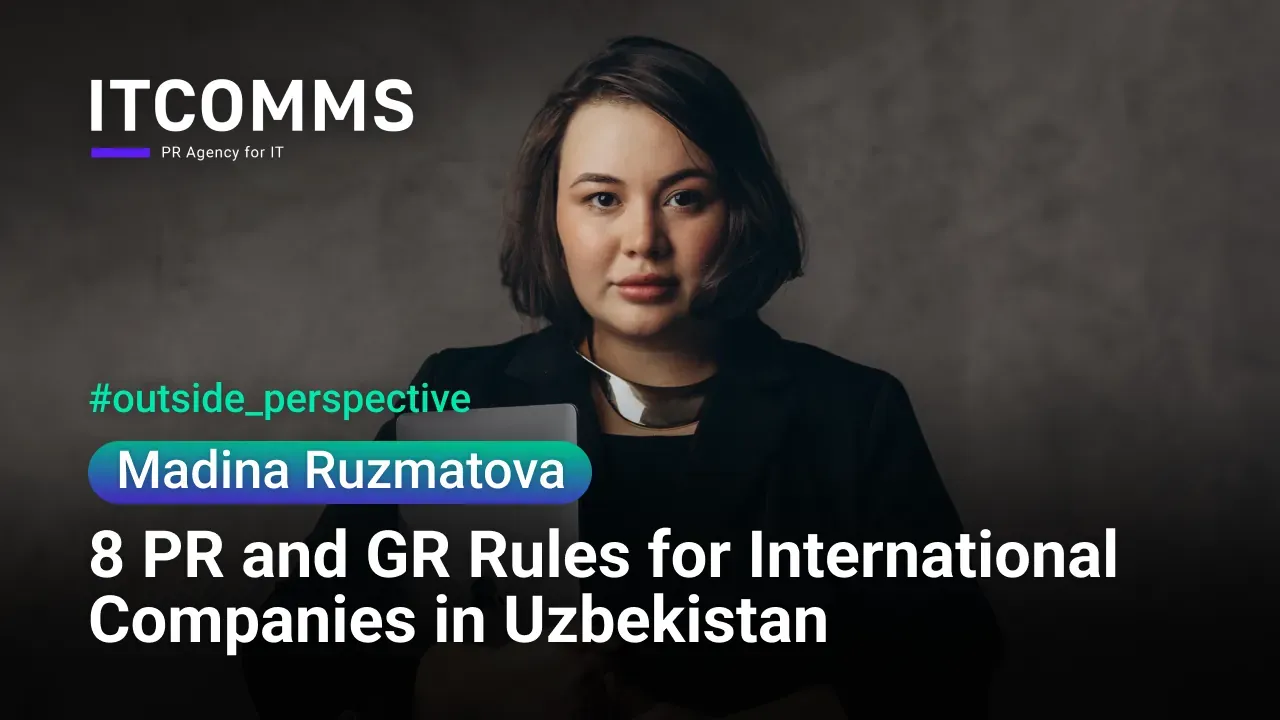
We spoke with Valentina Butnik, an international expert in corporate communications, reputation, and Executive Reputation. For more than 15 years she has worked with major businesses in telecom, fintech, and the digital economy. Valentina served as Director of External Communications at Beeline Uzbekistan (part of the VEON Group digital ecosystem) and MegaFon Tajikistan, and today she advises senior management on strategic communications and executive reputation.
PR is becoming part of business strategy
Over the past few years, the role of corporate communications in Uzbekistan has changed considerably. As the economy and investment have grown, companies have started competing not just for customers, but for the attention of investors, partners, the state, and top talent.
The way businesses approach communications has changed as well, Valentina says:
“Over the past five years, PR in Uzbekistan has gone from a ‘let's place an article about us' function to a full-fledged element of business strategy. Where the effectiveness of communications was once measured by the number of publications, what comes first now is trust, corporate reputation, stakeholder engagement, and a company's ability to explain its decisions to society.”
So modern PR does more than tell the world about a company. It explains the company's role in the national economy, builds long-term relationships with key audiences, and creates trust — which has become one of a business's most important competitive advantages.
As she puts it:
“The defining trend of recent years is the shift from classic PR to strategic communications, where the communications director takes part not only in promoting the company, but in shaping strategic business decisions.”
For international companies, localizing press releases isn't enough
Many international companies still enter new markets with a ready-made global communications strategy, assuming it will work equally well everywhere. In Uzbekistan, that approach rarely delivers.
“The most common mistake is assuming it's enough to use a global communications strategy — or the strategy a company used to enter other Asian markets — and that it will simply work.”
In Valentina Butnik's view, localization runs far deeper than translating materials.
“Uzbekistan is a market of long-term relationships. People watch closely — not only a company's product, but how well it understands the country, respects the local culture, invests in developing human capital, and is ready to be part of the national economy.”
That is why it pays to show up not only in the media but within the professional community: taking part in industry events, backing educational projects, developing partnerships, and signaling long-term commitment.
As she emphasizes:
“Localization isn't about translating press releases — it's a deep understanding of a country's cultural, economic, and institutional context.”
Reputation starts long before the first press release
Companies often get serious about communications only when they launch a product or run into a crisis. But lasting trust can't be built in a few weeks.
Reputation begins to take shape much earlier — in everyday management decisions, corporate culture, the way employees are treated, business transparency, and a company's ability to explain its role in the country's development.
As Valentina points out, international businesses need to answer one simple question before they even enter a market: why should the company matter to the country where it plans to operate? That answer becomes the foundation of its future reputation.
The most common mistakes foreign companies make
Despite the market's rapid growth, many companies keep repeating the same mistakes. They arrive with nothing but a product, lean on one-size-fits-all global messaging that ignores local context, start building relationships only when a crisis hits, and still treat PR as media relations and nothing more.
Modern communications are far broader than that.
“Communications bring together business, government, the professional community, employees, investors, and customers. It's a strategic task for the entire management team, not just the PR department.”
Reputation is becoming a strategic asset
Corporate reputation now directly affects a company's investment appeal, brand value, the quality of its partnerships, how quickly it can launch new projects, and its ability to attract the best specialists.
In Valentina Butnik's words:
“Reputation is no longer a standalone PR function — it's a genuine strategic asset of the business.”
And it's built from many factors at once: product quality, customer experience, how leaders behave, relationships with employees, business transparency, and social responsibility.
As she notes:
“You can't manage reputation through communications alone: it's shaped by every management decision a company makes.”
That is why boards of directors increasingly weigh reputational risk on par with financial, operational, and cyber risk.
Why the CEO's role keeps growing
Where the corporate brand used to be a company's main voice, the public visibility of its top leaders now carries more weight.
This is especially true in telecom, fintech, the digital economy, and artificial intelligence, where businesses have to keep explaining what the changes underway actually mean.
As Valentina puts it:
“People trust people more than they trust corporate logos. So a leader's public visibility isn't just a matter of personal branding — it's an element of corporate strategy and reputation management.”
That is why Executive Reputation is becoming one of the key areas of strategic communications.
Which topics actually work
A few years ago, launching a digital product or rolling out artificial intelligence was automatically newsworthy. Today it isn't.
In the expert's view, the central question has changed:
“Artificial intelligence, digital services, and fintech have stopped being a news hook in their own right. The real question is how far people are willing to trust them and whether they understand the value these technologies create in everyday life.”
So the topics coming to the fore are digital inclusion, data protection, cybersecurity, customer experience, the responsible use of artificial intelligence, and partnerships between business and government.
The future of corporate communications
As Central Asia's economy develops, the role of communications professionals is changing too. Their job today is not only to report on events, but to explain why what's happening matters for society, business, and the state.
As Valentina Butnik sees it:
“I'm convinced the next stage in the evolution of corporate communications in Central Asia is the shift from managing information to managing trust.”
Trust is what wins today. It helps a company attract investment, build long-term partnerships, get through crises more easily, and hold a stable position even in a fast-changing market. Successful communications are no longer a contest over the number of publications, but systematic work on reputation that becomes part of the company's overall strategy.
Translated with an AI translator